Leaked SFPD Drone Footage Highlights New Risks to Citywide Visual Privacy and Content Trust
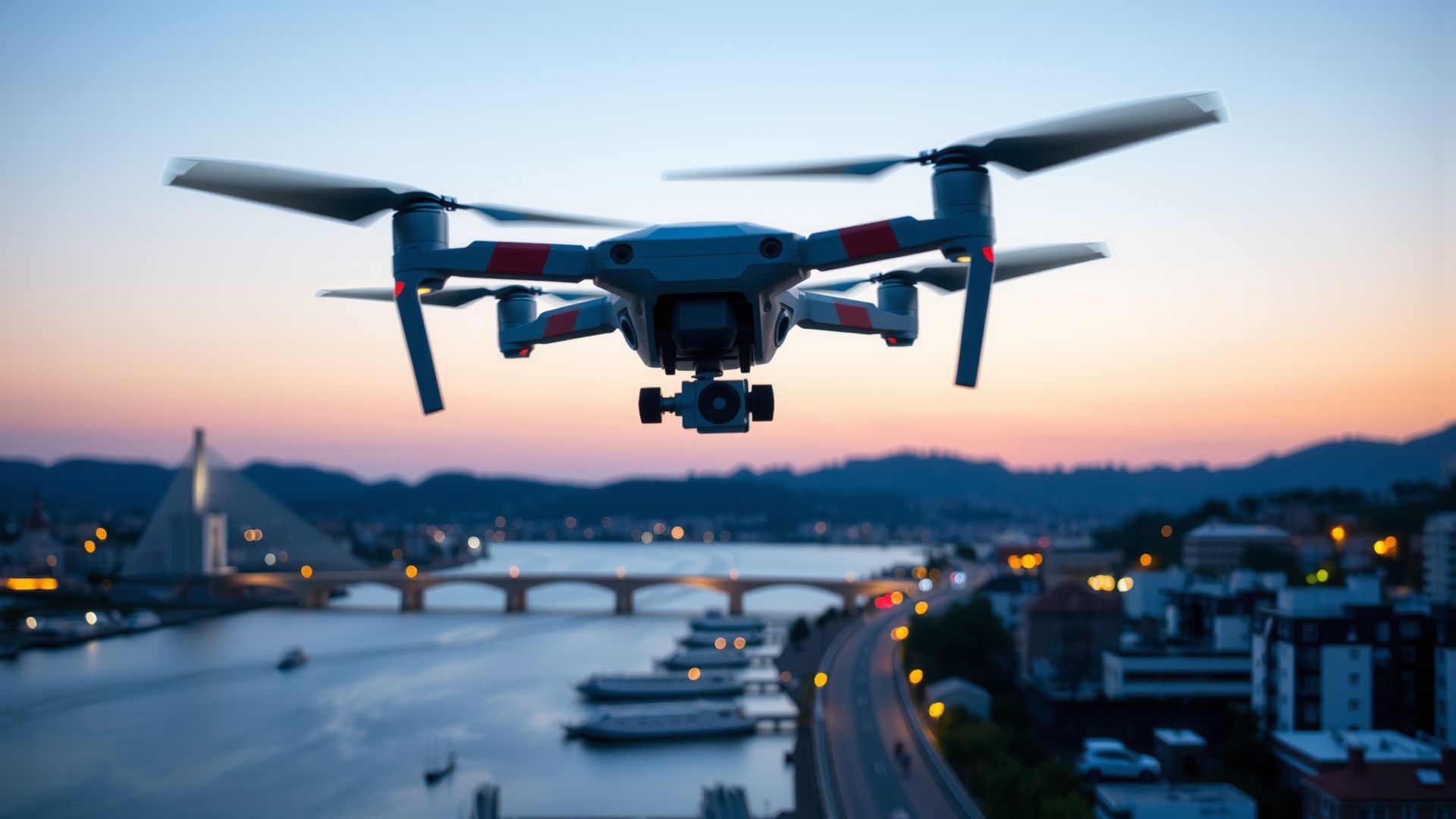
A large tranche of San Francisco police drone videos released from the Skydio platform has revealed the scale and granularity of aerial surveillance over the city. The leak is not only a privacy incident but also a test case for how raw visual data can be repurposed, manipulated, and weaponized in a generative-media era.
Introduction
Last week’s publication of hours of drone footage from the San Francisco Police Department cast a sharp light on a growing tension in modern cities: the collision of routine aerial surveillance with the realities of data leakage, replayability, and downstream reuse. The files—originating from the Skydio drone platform used by the police—contained high-resolution video that tracked movement across neighborhoods, showed faces and license plates in many frames, and documented police activities alongside ordinary life on city streets. The incident has immediate privacy implications and poses broader questions for how visual law-enforcement data should be governed, secured, and authenticated in an age of sophisticated synthetic media.
This piece examines what happened, why the leak matters beyond the particulars of San Francisco, and how the exposure of raw, high-fidelity visual records changes risk models for identity trust, content authenticity, and the potential misuse of generative AI systems. It considers the practical and policy-level mitigations that agencies and technology providers should prioritize to reduce harm and protect public trust.
What happened
According to reporting, a significant volume of drone footage recorded by SFPD drones using Skydio hardware and software became accessible outside intended operational channels. The material includes continuous multi-hour captures of urban neighborhoods, traffic corridors, parks, and the exterior of private residences. The footage was detailed enough to identify individuals and vehicles and to reconstruct movements and interactions over time. While some leaked clips surfaced on public forums, many files circulated in less visible spaces where they could be downloaded, archived, and repackaged.
At its core, the incident was a data-exposure event: files meant to be retained within a controlled law-enforcement environment were replicated beyond it. Whether the breach was the result of misconfiguration, insider access, third-party compromise, or inadequate access control remains a subject of investigation. Regardless of the technical vector, the outcome is the same: high-resolution urban surveillance material now exists in public hands, and that raw visual content can be inspected, annotated, and repurposed by anyone with the technical skills to do so.
Why it matters
The leak matters for two overlapping reasons. First, it is a privacy and civil-rights issue. Persistent aerial monitoring presents an unprecedented observational footprint: drones can capture continuous, mobile perspectives that were not previously available at scale to municipal authorities. When that footage is exposed, it creates a permanent record of people’s movements, associations, and behaviors in public and semiprivate spaces. Such records can be used for targeted harassment, doxxing, or surveillance by bad actors, and they can chill lawful public protest and everyday civic life.
Second, the leak matters for content authenticity and digital trust. High-quality, real-world footage is an exceptionally valuable resource for model training and synthetic content generation. Generative models trained on leaked aerial and street-level video could be used to create convincing forgeries, simulate events that never occurred, or produce highly realistic deepfakes of specific locations and people. The availability of original footage also undermines provenance: once authentic material mixes with synthetics on social platforms, distinguishing between what actually happened and what was generated or altered becomes harder, complicating journalism, legal evidence, and civic discourse.
Security and trust implications
From an AI-security perspective, the exposed dataset represents both a direct and an indirect attack surface. Directly, the imagery could feed facial-recognition systems, activity-recognition models, and geolocation classifiers that enable re-identification across datasets and services. Indirectly, the footage can be used to fine-tune generative adversarial networks and diffusion models that produce bespoke deepfakes — not merely of faces but of realistic scenes, vehicle movements, and police interactions. Once an attacker can synthesize plausible moment-in-time scenes tied to real people and addresses, the potential for impersonation, coercion, and fraud increases.
Content-authenticity frameworks that depend on provenance markers, metadata logs, or chained attestations face strain in such scenarios. Provenance can be stripped or altered in transit; authentic files may be selectively released to shape narratives; and the sheer volume of footage makes comprehensive auditing difficult. For identity trust systems that rely on visual confirmation—such as certain remote identification or verification workflows—the circulation of candid footage undermines assumptions about exclusive control over one’s image. Account-takeover scenarios could be amplified if attackers combine leaked visual evidence with social-engineering tactics, exploiting context-rich footage to impersonate officers, victims, or witnesses.
Mitigations and best practices
There is no single fix, but a layered approach can substantially reduce risk. At the technical level, law-enforcement agencies and contractors should treat raw visual datasets as highly sensitive assets: encrypt stored footage, enforce strict role-based access controls, implement multi-factor authentication for administrative tools, and maintain immutable audit logs. Automated redaction tools can remove or blur faces, license plates, and other identifiers when footage is retained for nonoperational use or shared externally. Where continuous retention is unnecessary, retention schedules and rolling deletion policies help minimize long-tail exposure.
On the content-integrity front, agencies should adopt robust content-authentication mechanisms. Digital signatures, cryptographic hashing, and secure provenance chains can help verify whether a piece of footage is original and untampered. These systems are not foolproof—metadata can be forged if private keys are compromised—but they raise the cost of manipulation and create forensic signals useful to journalists and courts. Transparency policies that document system capabilities, oversight mechanisms, and auditing results also help rebuild trust when incidents occur.
Policy and accountability considerations
Beyond technical controls, the incident underscores the need for clearer legal and policy guardrails governing aerial surveillance, data sharing, and third-party hosting. Municipalities should define lawful use cases for drones, set limits on data retention and sharing, and require independent audits of vendor security practices. Contracts with suppliers like drone makers and cloud-hosting providers must include explicit security requirements, breach-notification timelines, and audit rights. Regulators should consider standards for how government-collected visual data is stored, redacted, and disseminated.
Public accountability matters as well. When surveillance systems are scaled without community consent or oversight, leaks amplify distrust. Governments that rely on opaque drone programs should expect scrutiny and should proactively engage civil-society groups, privacy experts, and technologists to design governance frameworks. Clearer channels for whistleblowing and independent oversight can help detect and mitigate both malicious leaks and systemic misconfigurations before they proliferate.
Conclusion
The SFPD drone footage leak is more than a local data breach; it is a cautionary example of how modern, high-fidelity visual surveillance interacts with an ecosystem of reuse, manipulation, and trust erosion. In a world where generative AI tools can amplify and repurpose raw imagery into convincing forgeries, the unintentional or malicious release of real-world footage has consequences that reach far beyond privacy invasions. It threatens evidence integrity, enables re-identification and impersonation, and weakens the lines that separate legitimate public-safety monitoring from intrusive, persistent observation.
Addressing these challenges requires a mix of immediate technical hardening, adoption of content-authenticity practices, stronger contractual and regulatory safeguards, and ongoing public engagement. Cities and agencies that deploy aerial surveillance should assume that footage may someday circulate publicly and plan accordingly: minimize collection where possible, protect what is collected, and make governance transparent. Only by combining security best practices with clear oversight and accountability can institutions hope to manage the twin risks of real-world surveillance harms and the growing capabilities of synthetic media.