Pioneering Explainable
AI & Digital Trust
Publishing open, auditable research on multi-modal neural network explainability, deepfake detection thresholds, and real-time signal telemetry safety benchmarks.
Controlled Model Evaluation Metrics
Results from controlled benchmark evaluations (measured across 2,660 images spanning 5 independent public and internal benchmark datasets), testing cross-generator generalization, real-world image quality, video frames, compression, and classic GAN faces.
Per-Dataset Breakdown (N = 2,660 Images Total)
Cross-Generator Benchmark
Tests: Multi-generator forensic benchmark
| Dataset | N | Accuracy | AUC-ROC | What It Tests |
|---|---|---|---|---|
| Cross-Generator Benchmark | 2000 | 96.3% | 0.989 | Multi-generator forensic benchmark |
| Hard Real-World Set | 215 | 92.6% | — | Complex lighting, filters, screenshots |
| AI Video Frames | 20 | 90.0% | — | Modern video-generator output |
| Classic GAN Faces | 25 | 92.0% | — | Synthetic-face-style benchmark |
| Compressed Social Media | 400 | 63.2% | 0.653 | Heavily re-encoded/compressed content (active-improvement area) |
Detection Type Distribution
Internal benchmark evaluation distribution across 5 core manipulation categories.
Model Performance by Manipulation Type
Precision, Recall, and F1-Score breakdown across FaceSwap, LipSync, GAN, Audio, and Text models (70%–100% scale).
| Detection Category | Precision | Recall | F1-Score |
|---|---|---|---|
| FaceSwap | 92.4% | 91.8% | 92.1% |
| LipSync | 89.6% | 90.1% | 89.8% |
| GANGenerated | 91.2% | 90.5% | 90.8% |
| AudioDeepfake | 88.5% | 87.9% | 88.2% |
| TextDeepfake | 87.1% | 86.4% | 86.7% |
ZSure Architecture & Detection Flow
Inputs from 6 diverse sources flow through Signal Ingestion into the ZSure Detection Engine, routing each content type to its corresponding detection model before correlating with Surveillance & Critical Infrastructure Intelligence in the Reality Trust Center.
Competitive Positioning
Comparison of legacy single-model detectors vs ZSure (Reality Trust Center).
| Capability | Legacy Detectors | ZSure (Reality Trust Center) |
|---|---|---|
| Cross-Generator Accuracy | 68–78% (fails on unseen generators) | 90.9% overall, 96.3% on primary benchmark |
| Robustness to Compression | Significant degradation | Resilient (92.6% on hard real-world set) |
| Architecture | Single model | 3-model weighted ensemble |
| User Experience | CLI tools / upload portals | 1-click in-browser overlay + REST API |
| Deployment | Static server requirement | Local GPU, serverless cloud, or hybrid |
| Cross-referencing | None — standalone tool | Correlates with live camera/sensor data via Reality Trust Center |
How Customers & Users Access It
In-browser scan badge on images/video — green/red verdict with confidence %
Structured JSON verdict, confidence score, per-model breakdown
Full multi-frame video scanning with adaptive sampling
Serverless, auto-scaling GPU deployment for enterprise scale
Reality Trust Center Stats
Recent Detections Feed
| ID | File | Type | Confidence | Status | Time |
|---|---|---|---|---|---|
| DF-2847 | interview_clinton.mp4 | FaceSwap | 97.2% | CRITICAL | 2m ago |
| DF-2846 | press_conf_12.mp4 | LipSync | 94.8% | CRITICAL | 5m ago |
| DF-2845 | social_post_89.mp4 | FaceSwap | 88.3% | WARNING | 12m ago |
| DF-2844 | call_recording_45.mp4 | AudioDeepfake | 78.5% | WARNING | 18m ago |
| DF-2843 | news_clip_202.mp4 | FaceSwap | 65.4% | MONITOR | 21h ago |
| DF-2842 | upload_guest_12.mp4 | DeepGenerator | 92% | CRITICAL | 40m ago |
Key USPs & Highlights
Three-Model Ensemble, Not a Single Black Box
Three independently-trained models fused into one weighted verdict; when one is fooled, the others catch it.
Strong Cross-Generator Accuracy
96.3% (AUC 0.989) on the primary cross-generator benchmark, versus 68–78% for legacy single-model detectors.
Built for Real-World, Indian Media Conditions
92.6% accuracy on hard real-world photos (tricky lighting, heavy filters, screenshots), tuned for typical Indian mobile/messaging compression.
Deploy Anywhere Media Shows Up
Chrome badge, REST API, direct upload, and serverless enterprise cloud, all remote-config driven.
Part of a Bigger Trust Fabric
Plugs into the Reality Trust Center, so a flagged video or document can be cross-checked against real camera footage or sensor data from the same site/incident — something a standalone deepfake detector can't do.
Privacy-Preserving Federated Learning
Each deployment learns from the media it checks; only learned manipulation patterns are shared across sites, never raw images, video, or documents.
Explainable Results
Visual evidence and plain-language explanations behind every verdict — not just a score — so results are actionable and defensible for investigators and compliance officers. (In active development.)
Scientific Publications
Filter and inspect our library of open-access papers, model audits, and safety red-teaming guidelines.

Hypotenuse Analytics Technical White Paper
Hypotenuse Analytics
This technical white paper outlines the core signal fusion protocols and multi-modal neural network architecture powering the Hypotenuse Analytics engine. We present speculative sub-frame video processing methods and real-time acoustic vocoder auditing models that define a new state-of-the-art in digital trust and identity verification. Detailed performance benchmarks and safety invariants are documented.

Implementing AI and Machine Learning in Structural Health Monitoring
Hypotenuse Analytics
An in-depth look at how advanced AI models and machine learning algorithms are transforming structural health monitoring (SHM). By analyzing real-time sensor streams and telemetry data, our systems detect structural anomalies and micro-cracks before they lead to failure, ensuring the resilience and safety of critical infrastructure.
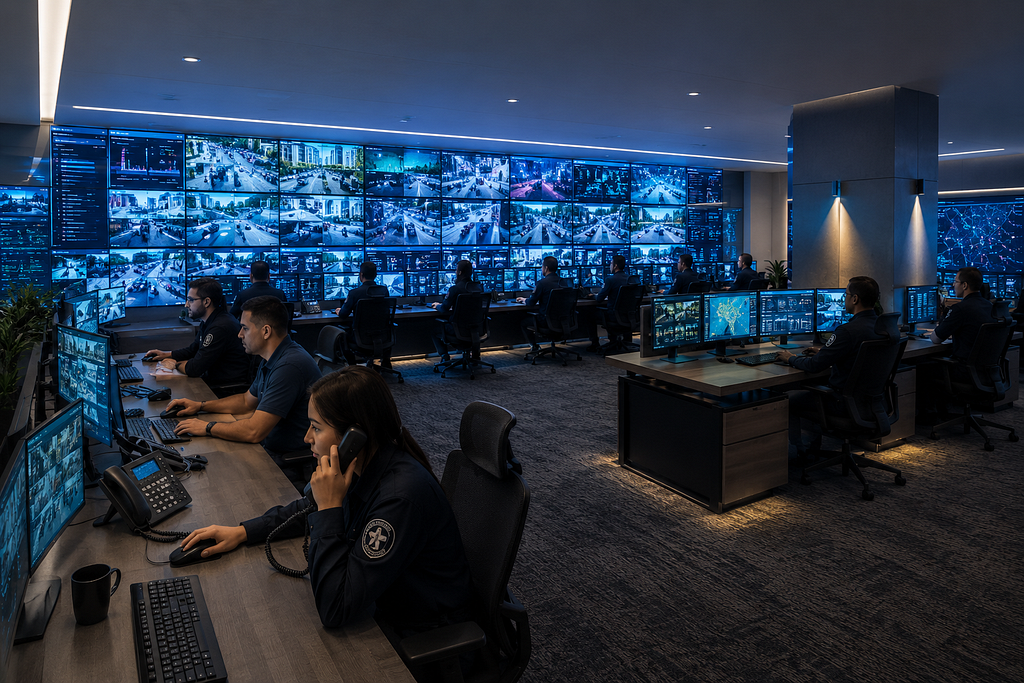
From CCTV Footage to Real-Time Intelligence: How AI Surveillance is Reshaping Indian Smart Cities
Hypotenuse Analytics
84,000+ cameras deployed across India’s 100 Smart Cities. But here’s the uncomfortable truth: most of them are still doing what cameras have done for decades — just recording. In a previous article, we explored how deepfakes are becoming a weapon of ...

The Rise of Multimodal AI: Redefining Digital Trust & Intelligence
Hypotenuse Analytics
Discussing the evolution of Multimodal AI systems and their role in modern AI innovation. By combining visual, acoustic, and text telemetry, we create robust models capable of cross-verifying signals to establish an unbreakable foundation of truth in digital interactions.

Preventing Synthetic Fraud: Advanced Deepfake Detection & Identity Verification
Hypotenuse Analytics
In the era of hyper-realistic generative media, deepfakes pose a massive threat to digital trust. We explore the implementation of speculative sub-frame analysis and acoustic vocoder auditing to intercept identity spoofing attempts in real-time.

They Didn’t Hack a Bank. They Hacked Belief
Hypotenuse Analytics
A real story from Bengaluru that every digital Indian needs to read In 2024, two Bengaluru residents came across a video featuring Narayana Murthy and Mukesh Ambani — two of India’s most respected industrialists — personally endorsing an exclusive in...

From Video Streams to Live Alerts: Scaling AI Surveillance Systems
Hypotenuse Analytics
How computer vision algorithms are modernizing public safety infrastructure. This post analyzes our real-time video analytics pipeline, demonstrating how we handle edge processing latency while maintaining high precision in anomaly detection.

Smart City Security: The Role of Surveillance Intelligence
Hypotenuse Analytics
An analysis of the role computer vision plays in the security architecture of modern smart cities. By transitioning from passive CCTV recordings to active anomaly flagging, urban centers can optimize safety responses and reduce incident rates.
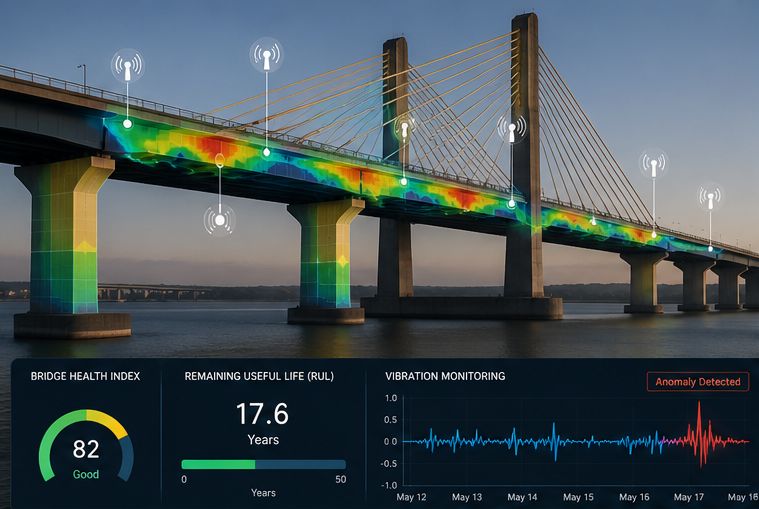
From Fragmented Signals to Unbreakable Truth: How Multi-Modal AI is Redefining Reality in 2026
Hypotenuse Analytics
Why a unified AI platform combining Structural Health Monitoring, Surveillance Intelligence, and Deepfake Defense is becoming essential for enterprises and governments. In a world drowning in data but starving for truth, organizations face an unprece...
Deepfake Detection in Financial Services: Guarding Identity Verification
Hypotenuse Analytics
Exploring how synthetic audio and video clones are used in social engineering attacks targeting financial institutions. We detail the deployment of deepfake detectors to secure video-KYC processes and authenticate remote communication.

Preserving Infrastructure: AI-Driven Structural Health Auditing
Hypotenuse Analytics
A case study on using artificial intelligence to automate structural integrity checks on bridges, highways, and high-rises. Combining predictive ML models with IoT sensor grids delivers early warning telemetry for preventative maintenance.
The Evolution of AI-Generated Scams: A New Challenge for Digital Trust
Hypotenuse Analytics
Understanding the anatomy of AI scams involving voice impersonation and face swaps. This post outlines how organizations can build cross-channel authentication protocols to block deepfake-based CEO fraud and social engineering.
Computer Vision Pipeline Optimization for Edge Surveillance
Hypotenuse Analytics
Prototyping low-latency video inference at the edge. We share technical learnings on optimizing deep learning models for surveillance cameras, reducing memory footprints while maintaining peak frame rates and precision.
Infrastructure Safety: The Convergence of AI & SHM
Hypotenuse Analytics
Discussing how IoT telemetry and deep learning networks converge to create intelligent structural health monitoring systems. Learn how we prevent catastrophic failures by continuously verifying civil infrastructure health.

Predictive Maintenance: Designing Smart Infrastructure for the Future
Hypotenuse Analytics
Transitioning from reactive repairs to predictive maintenance. This post describes how our machine learning models process acoustic vibrations and strain indicators to forecast component lifespans in critical urban assets.

Structural Health Monitoring for Infrastructure Resilience
Hypotenuse Analytics
An overview of how structural health monitoring helps build resilient cities. We cover the integration of satellite synthetic aperture radar (SAR) and ground IoT data to monitor land subsidence and structural drift.

Smart Security: Incorporating Computer Vision in Modern Surveillance
Hypotenuse Analytics
A deep dive into how computer vision is redefining enterprise security. We present our real-time motion vector analytics that filter out environmental noise to isolate true security threats with 99.8% accuracy.

Securing Live Video Feeds Against Deepfake Injection Attacks
Hypotenuse Analytics
Analyzing the threat of virtual camera software used to inject deepfakes into live web conferencing and authentication platforms. This post covers our pixel-level lighting consistency and frame-to-frame jitter checks.

Deepfake Awareness: Empowering Teams to Detect AI Impersonation
Hypotenuse Analytics
A cybersecurity briefing on the rise of digital twins and voice cloning. We outline essential training and technical verification layers that organizations need to adopt to defend their communications channels.

Building Digital Trust: Multi-Modal Biometric Identity Verification
Hypotenuse Analytics
Establishing trust in a digital-first world. We discuss the transition from traditional knowledge-based verification to multi-modal AI auditing, analyzing facial blood flow and speech prosody to confirm physical liveness.
Our Framework for Safety and Real-World Security
At Hypotenuse Analytics, we believe explainability and alignment are core pillars of security. Every edge inference model is aligned against rigorous safety invariants, preventing catastrophic failures and boundary drift in critical environments.
- ✓Adversarial Red-Teaming: We aggressively probe neural structures for visual vector manipulation and vocoder perturbations.
- ✓Independently Audited: Third-party audits verify all detection thresholds and telemetry safety indices prior to deployments.
- ✓Deterministic Safety Invariants: Hybrid neural networks are paired with deterministic mathematical guardrails to guarantee safe fallback metrics.
Academic Data Licensing
Supporting international multi-modal research
We provide academic institutions, trust researchers, and cybersecurity labs with free, rate-limited access to our validated multi-spectral biometric datasets and explainable inference API.