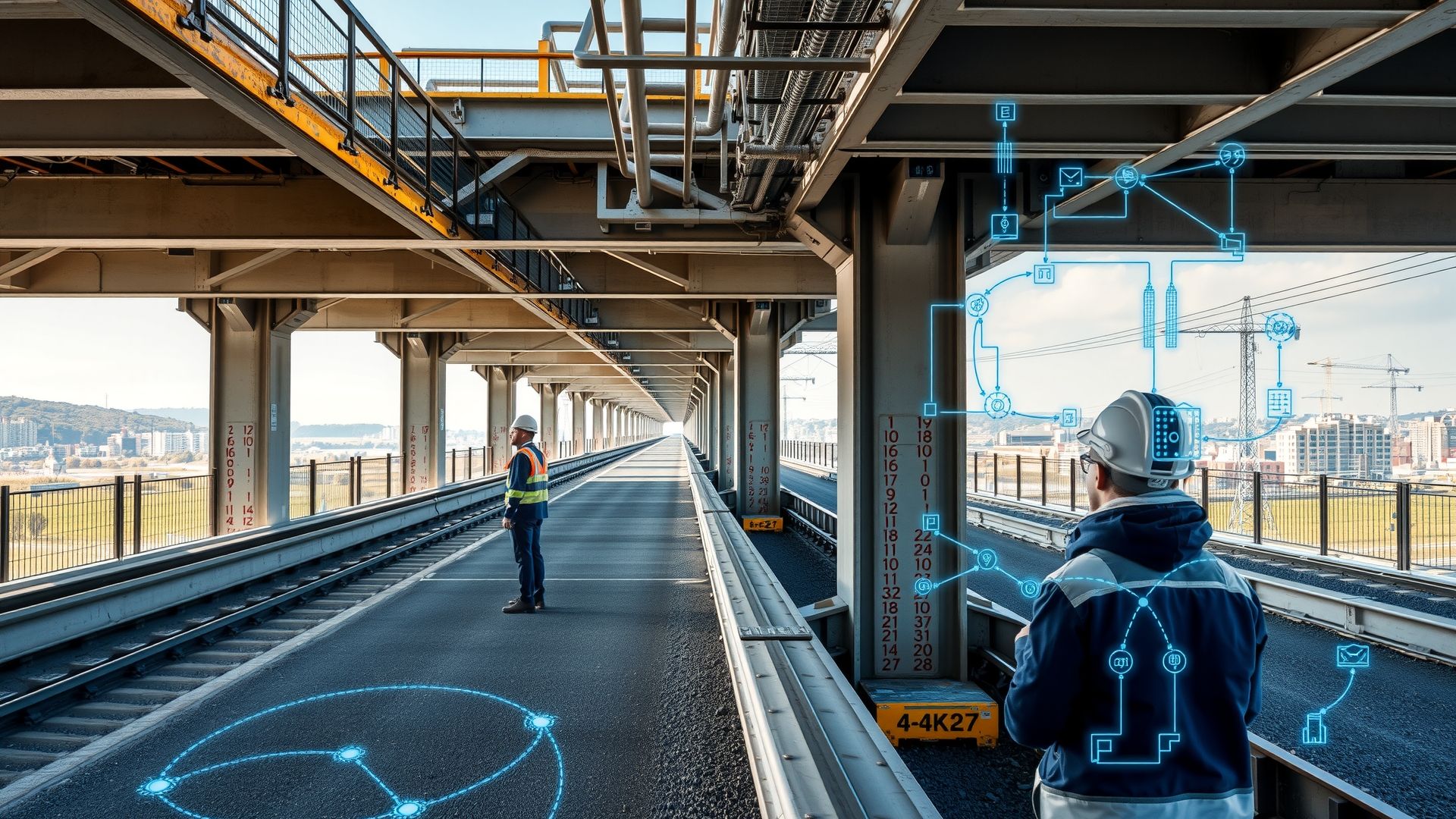
Leveraging AI and Sensors for Real-Time Monitoring of Aging Bridges in Greece
Greece is advancing its infrastructure durability by deploying AI and sensor technology to monitor aging bridges, ensuring structural safety and resilience. This approach enables real-time assessments of conditions, preventing deterioration and potential disasters.
Introduction
As infrastructure continues to age, the need for effective monitoring solutions has become crucial. Greece has recently taken significant steps to protect its aging bridges by integrating advanced technologies like artificial intelligence (AI) and sensor networks. This initiative reflects an increasing global emphasis on structural health monitoring (SHM) and predictive maintenance as vital components of infrastructure management.
The country's bridges, which face the challenges of wear and tear, necessitate real-time monitoring to ensure safety. The collaboration between engineers, tech experts, and governmental entities aims to stabilize and enhance the durability of these critical structures.
What happened
In ongoing efforts to leverage technology for civil engineering, Greece has commenced projects that focus on the deployment of AI and sensor technology across key infrastructure. This includes the installation of IoT sensors on various bridge sites to capture real-time data regarding structural integrity.
The initiative encompasses both static and dynamic assessments, allowing for comprehensive condition monitoring that adapts to environmental factors as well as structural performance. By collecting data on vibrations, strain, temperature, and humidity, engineers can gain valuable insights into the state of each bridge.
Why it matters
This technological shift is essential for several reasons. First and foremost, it enhances public safety by enabling proactive detection of potential vulnerabilities before they escalate into greater risks. Aging infrastructure often presents unforeseen challenges; thus, implementing real-time monitoring acts as a safeguard against catastrophic failures.
Furthermore, the integration of AI facilitates anomaly detection, an essential feature of modern predictive maintenance. Identifying irregular patterns enables swift action to be taken, mitigating potential damage and extending the lifespan of structures.
Industry and infrastructure implications
This move towards smarter infrastructure has profound implications for civil engineering and public works. As Greece modernizes its bridge management systems, other nations can observe a blueprint for similar implementations. This trend signals a shift in how infrastructure is managed globally, emphasizing the importance of real-time data and analysis.
Additionally, utilizing digital twin technologies allows engineers and stakeholders to simulate various scenarios, enhancing understanding of how different factors affect structural integrity over time. Such foresight is indispensable for effective asset integrity and lifecycle management.
Future outlook
The future of bridge monitoring in Greece appears promising, with stakeholders recognizing the necessity for scalable solutions. The successful deployment of AI and sensor technology could lead to widespread adoption across other infrastructure sectors, including tunnels and railway networks.
In the coming years, we can expect Italy's efforts in smart infrastructure to provide actionable data that informs decision-making processes at multiple levels, from local municipalities to governmental agencies. These initiatives will likely offer pathways to more resilient structures and enhanced public trust in infrastructure maintenance.
Conclusion
Greece's initiative to employ AI and sensors for the real-time monitoring of aging bridges heralds a significant step forward in infrastructure management. By embracing cutting-edge technologies, the country not only ensures the safety and reliability of its bridges but also sets a precedent that can inspire global practices in structural health monitoring.
As AI continues to evolve and expand in capabilities, its integration into civil engineering practices will reinforce the resilience and longevity of vital infrastructure, ultimately safeguarding communities and economies.