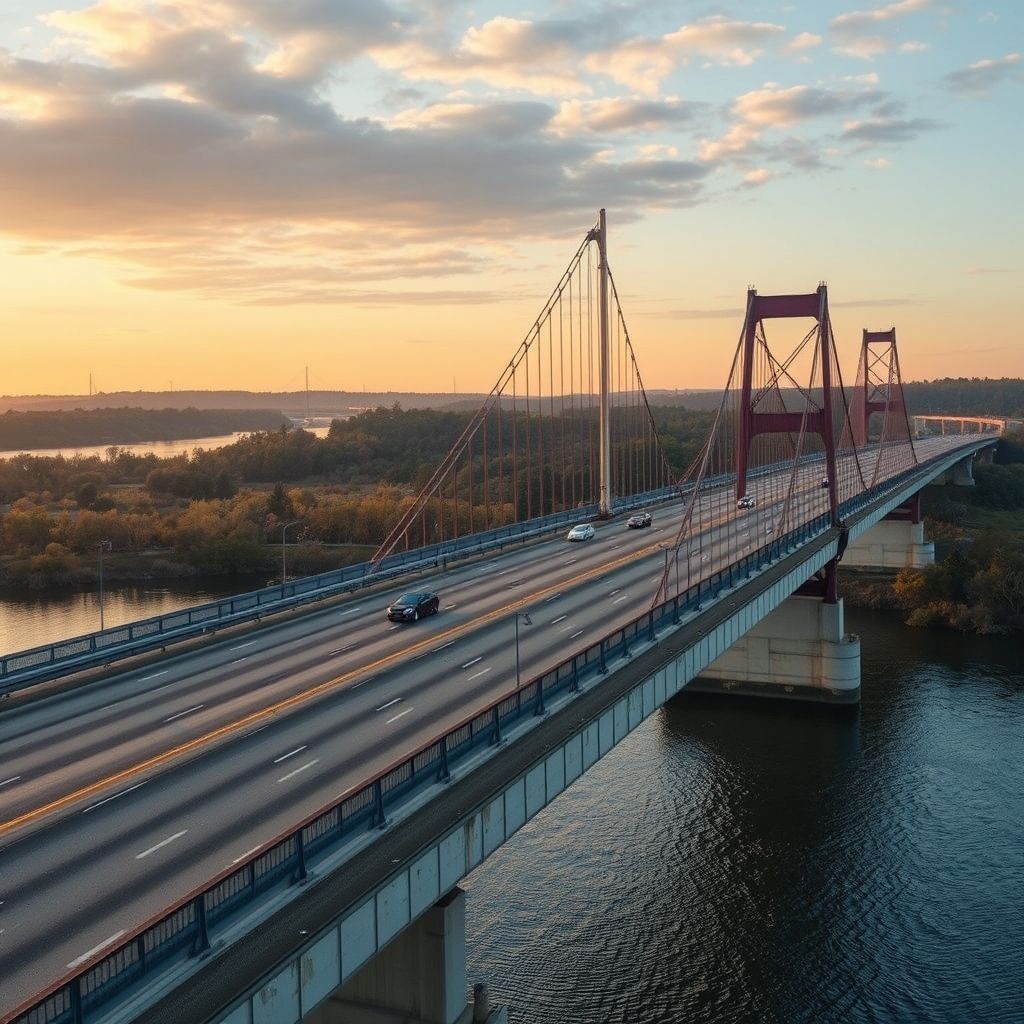
Popp’s Ferry Bridge Reopened After Multi‑Vehicle Wreck: Lessons for Critical Infrastructure Intelligence
A multi‑vehicle wreck temporarily closed the Popp’s Ferry Bridge. The quick clearance and reopening underscore the operational and monitoring challenges facing bridge owners and transport agencies.
Introduction
The recent closure and subsequent reopening of the Popp’s Ferry Bridge following a multi‑vehicle wreck is a timely reminder of how single incidents can ripple through transportation networks and public safety systems. While the bridge was cleared and traffic restored, the event highlights gaps and opportunities in how we monitor, assess and manage bridges in real time. For asset owners, operators and emergency responders, the incident illustrates why investments in infrastructure intelligence—digital twins, sensors, AI‑driven inspections and edge analytics—are no longer optional.
What happened
Local authorities temporarily closed the Popp’s Ferry Bridge after a multi‑vehicle collision occurred on the structure. Emergency crews responded to the scene, prioritizing life safety and stabilizing vehicles. The bridge was inspected and ultimately cleared for reopening. Although the disruption was resolved relatively quickly, the sequence—impact, closure, inspection, clearance—follows a familiar pattern that can cause congestion, economic loss and safety risk when not managed efficiently.
Immediate operational steps taken
Standard procedure in such events typically includes securing the site, traffic diversion, quick visual inspection of the deck and visible superstructure, and notifying engineering teams for a more thorough assessment if warranted. That the bridge reopened indicates either no significant structural damage was found or that any damage was non‑critical and safe to operate under monitored conditions. Still, the timeline from incident to reopening is where smart monitoring technologies can make the greatest difference.
Why this matters for critical infrastructure owners and operators
Bridges are critical nodes in transportation networks and carry concentrated loads, utilities and emergency response traffic. A temporary closure of a connector like Popp’s Ferry can disrupt supply chains, extend response times for emergency services and concentrate risk on alternative routes. Beyond immediate disruption, collisions can cause localized structural damage—scour, bent members, damaged bearings or compromised expansion joints—that, if undetected, degrade long‑term integrity.
For operators, minimizing downtime and ensuring safety require both rapid assessment capabilities and data‑driven decisions about when to reopen or restrict loads. Relying solely on manual inspections can extend closures and increase economic impact. Conversely, premature reopening without adequate assessment risks public safety. The balance is reached through resilient monitoring systems and standardized inspection workflows supported by intelligence tools.
How modern technologies relate to this kind of incident
AI and Computer Vision for rapid damage triage
Computer vision systems mounted on traffic cameras, patrol vehicles or drones can automatically detect collision events and classify probable damage types—vehicle intrusion into barriers, spalled concrete, visible member deflection—within minutes. AI models trained on bridge damage imagery accelerate triage and guide inspectors to high‑priority locations, reducing inspection time and focusing field resources where they matter most.
IoT sensors and Edge AI for continuous awareness
Distributed sensors—accelerometers, strain gauges, displacement transducers and acoustic sensors—provide continuous data streams that can show immediate anomalies during an impact event. Edge AI deployed at the sensor hub can filter false positives and trigger alerts when thresholds are exceeded, enabling near‑real‑time closure decisions. Sensor fusion with traffic and weather feeds improves context, distinguishing routine heavy loads from collision impacts.
Digital Twins and predictive scenario analysis
A digital twin of a bridge holds baseline geometry, material properties and historical load and inspection data. After an impact, the twin can be used to simulate potential internal damage scenarios and run rapid structural checks to estimate residual capacity. Coupling the twin with live sensor data helps operators decide whether restrictions (e.g., reduced speed, lane closures, weight limits) are necessary prior to a full structural assessment.
Practical engineering and operational insights
From an engineering perspective, bridges should be designed and maintained with event resilience in mind. Practical steps that owners and operators can adopt include:
- Establish pre‑defined post‑impact inspection protocols that differentiate between low‑risk and high‑risk events based on sensor triggers and visual evidence.
- Deploy a mix of permanent sensors on critical load paths and portable inspection tools (drones with high‑resolution imaging, LiDAR and thermal cameras) for rapid deployment.
- Integrate automated detection systems with traffic management centers to expedite closures and detours while keeping the public informed.
- Use NDT methods (ultrasonic testing, magnetic particle testing) guided by data from inspections and the digital twin to focus laboratory or field testing efforts.
Operationally, response speed is improved when maintenance crews, structural engineers and traffic managers share a common situational picture. Standardized data formats and APIs that feed inspection outcomes into asset management systems reduce administrative delay and accelerate repair planning.
Future industry implications
Incidents like the Popp’s Ferry collision accelerate a broader shift toward integrated infrastructure intelligence. Agencies will increasingly adopt hybrid monitoring strategies that combine permanent instrumentation, mobile inspection assets and digital twins. As sensor costs decline and analytics mature, even smaller agencies will be able to deploy meaningful monitoring and decision support systems.
Regulatory bodies may move to codify minimum post‑impact inspection requirements that incorporate sensor data and remote inspection evidence. Insurance and liability frameworks could also evolve, rewarding operators that deploy continuous monitoring and rapid assessment capabilities with lower premiums or expedited claim processing.
The evolution of edge computing and federated learning models will enable localized, privacy‑preserving analytics that can scale across jurisdictions. This reduces latency for emergency decisions and allows models to be updated with local conditions. Over time, aggregated incident data will inform predictive maintenance programs, identifying components or locations prone to impact damage or recurring issues and prioritizing retrofits such as protective barriers or geometric realignments.
Conclusion
The reopening of the Popp’s Ferry Bridge after a multi‑vehicle wreck is more than a local traffic story; it is a case study in how transport infrastructure behaves under stress and how modern monitoring and intelligence can shorten downtimes and enhance safety. For bridge owners and operators, the key takeaway is clear: invest in the tools that enable fast, evidence‑based decisions—sensors, AI, digital twins and interoperable operational processes. These capabilities not only speed recovery after incidents but also build long‑term resilience and reduce lifecycle risk to critical transportation assets.