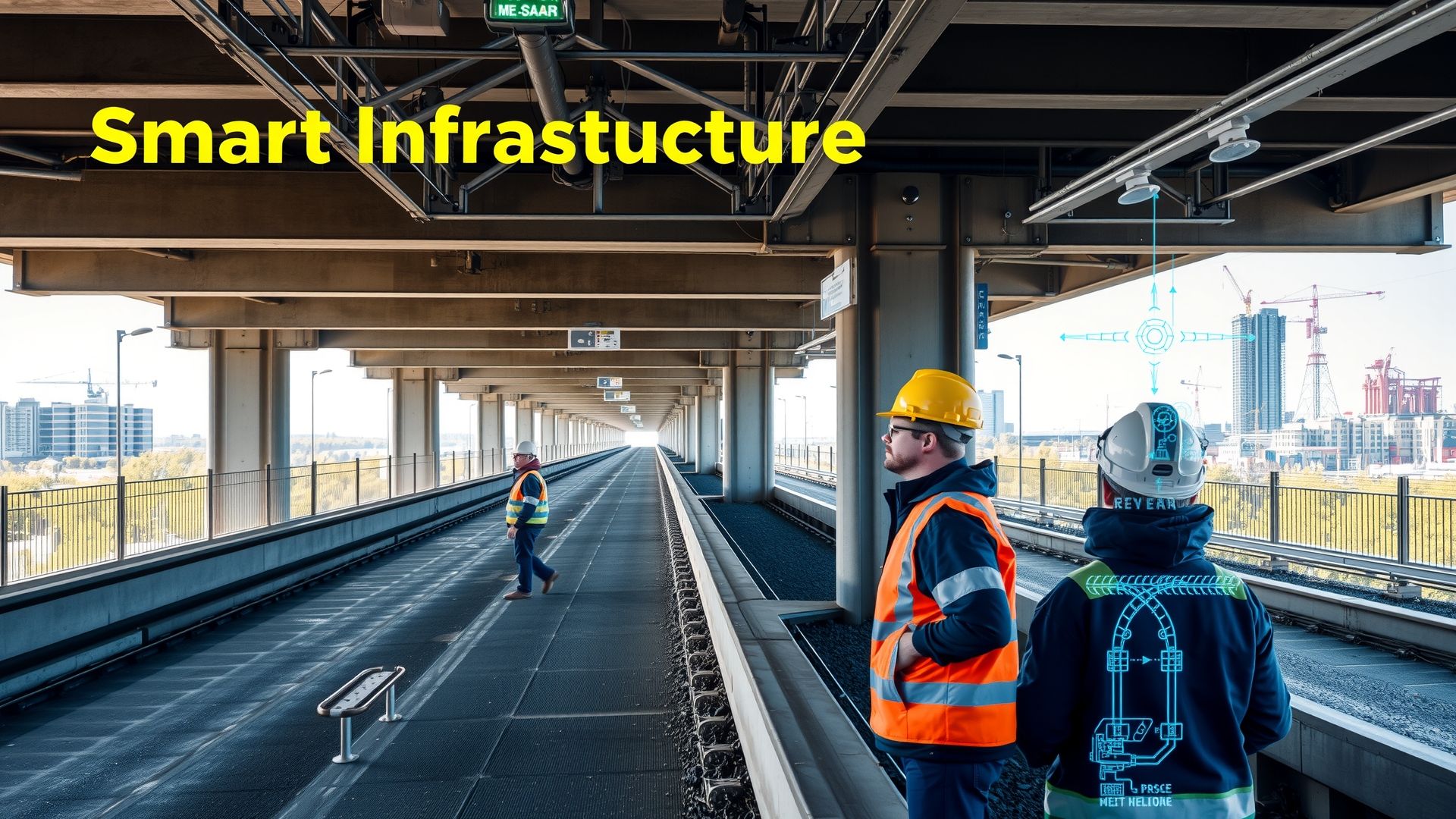
The Rise of Smart Infrastructure: An Analytical Perspective
The smart infrastructure market is anticipated to reach an impressive $1.36 billion, reflecting growing investments in technology-driven solutions for monitoring and maintaining civic structures. This article delves into the significance of monitoring technologies in enhancing infrastructure resilience and efficiency.
Introduction
The infrastructure sector is undergoing transformative changes, owing to advancements in technology and the increasing focus on sustainability and efficiency. A new report estimates that the smart infrastructure market will reach a valuation of $1.36 billion, driven by innovations in monitoring and maintenance practices.
This evolution is particularly significant in areas such as structural health monitoring (SHM), where technologies enable real-time data collection and analysis of infrastructure conditions. Such developments can drastically improve safety, operational efficiency, and asset integrity in civil engineering.
What happened
The market dynamics of smart infrastructure are influenced by several factors, including rapid urbanization, the necessity for predictive maintenance, and the growing integration of industrial IoT systems. With aging infrastructure globally, there’s a notable push for solutions that monitor structural performance and detect potential issues before they escalate into costly repairs or disasters.
Recent developments show increased investments in sensor networks, digital twins, and advanced analytic tools. These technologies allow engineers and decision-makers to obtain real-time insights, which can be vital for maintaining the integrity of structures such as bridges, tunnels, and railways.
Why it matters
The implications of smart infrastructure extend beyond mere cost-effectiveness. Enhanced monitoring practices contribute to improved public safety and resilience against environmental challenges. For instance, predictive maintenance models derived from data analytics can minimize downtime and optimize resource allocation, effectively addressing the challenges posed by climate change and aging structures.
Furthermore, the integration of AI for infrastructure analysis can facilitate anomaly detection and damage assessment, promoting a proactive approach to infrastructure management. This transition from reactive to proactive monitoring is critical in ensuring the longevity and reliability of civil engineering projects.
Industry and infrastructure implications
As smart infrastructure gains traction, it will reshape industry standards and practices. The adoption of condition monitoring technologies is expected to redefine how engineers assess and maintain infrastructure assets.
A key implication is the increasing collaboration between engineers, technology providers, and urban planners. This interdisciplinary approach is essential for integrating smart tools into existing frameworks, ensuring they are not only effective but also user-friendly and beneficial to the overarching goal of sustainable urban development.
Future outlook
The future of smart infrastructure holds promising potential as technologies continue to evolve. Emerging trends indicate a shift towards decentralized monitoring systems that utilize cloud computing for data management, thus enhancing scalability and accessibility.
Moreover, the broader adoption of smart infrastructure solutions may lead to new regulatory frameworks and standards, focusing on safety and resilience in design and construction practices. As stakeholders recognize the value of data-driven decision-making, the emphasis on AI and machine learning in civil engineering will likely intensify.
Conclusion
The growing market for smart infrastructure reflects a critical shift in how society approaches engineering and maintenance. By leveraging technology, the industry can enhance infrastructure safety, optimize resource use, and pave the way for more resilient urban environments.
As we look to the future, embracing these technological advancements will be essential for meeting the challenges posed by urbanization and climate change. As such, continuing research and investment in intelligent infrastructure systems will drive progress and foster a sustainable future for generations to come.